This past month, I had the opportunity to go on safaris in Tanzania and Kenya in East Africa. It took almost thirty hours flight time plus layovers at airports to get to Tanzania. It took over two days to get past the jet lag and begin the actual journey into the wild. Our tour director, Stacie Wright, a naturalist and biologist, provided a wealth of information on the wildlife and the culture we visited. We joined a tour group of twenty-nine people from all over the US and one couple from Canada. All eager to venture forth. For most, this was our first time on safaris. We soon learned the Swahili greeting. Jambo. Commonly used when meeting others and also put into a fantastic song which children at a school we visited sang for us.



During our drives through the countries, we passed fields of recently picked maize, shrubs loaded with red coffee beans, banana trees, and fields of cotton. Coffee, tea, cashews, maize, sweet potatoes, bananas, sugar cane, tobacco, and cotton are the chief crops. At our lodges and hotels, I woke up early and enjoyed a cup of strong Kenyan coffee or sweet, citrus-scented Tanzanian tea. Buffet style meals provided a wide choice of local cuisine that included grilled sweet potatoes, okra, mixed vegetables, plantains, sliced pineapples, various kinds of meat and fish, and baked goods.
The Serengeti National Park
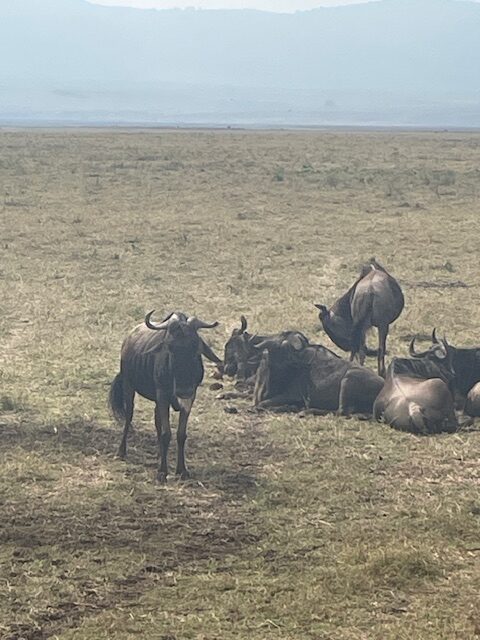
Picture widespread savannah dotted with acacia trees, open plains with short grasses, riverine areas, or hilly and wooded terrain. The Serengeti is a changing landscape and home to many types of wild animals. We spotted countless antelopes, wildebeest, and zebras grazing in the grass or following the great migration for water.


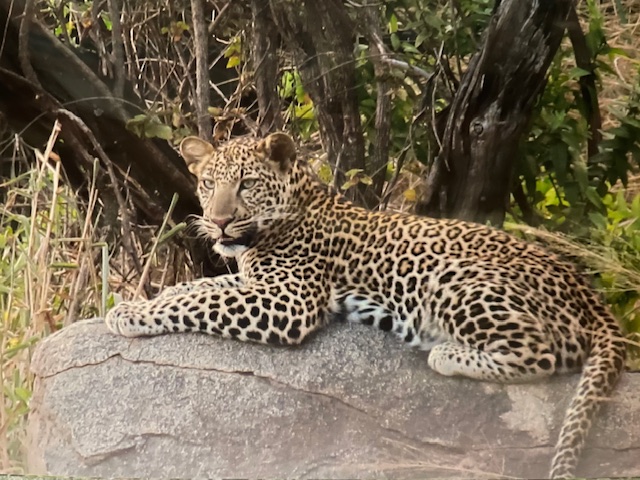
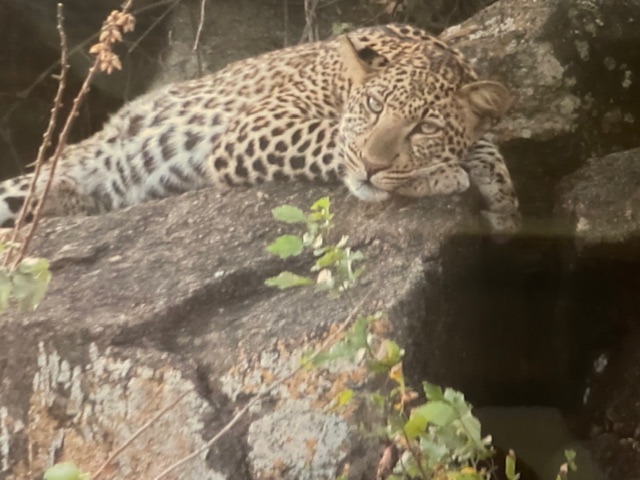
A leopard rested on a tree limb, probably finishing up a recent kill, then stretched and moved to a rocky lookout point.

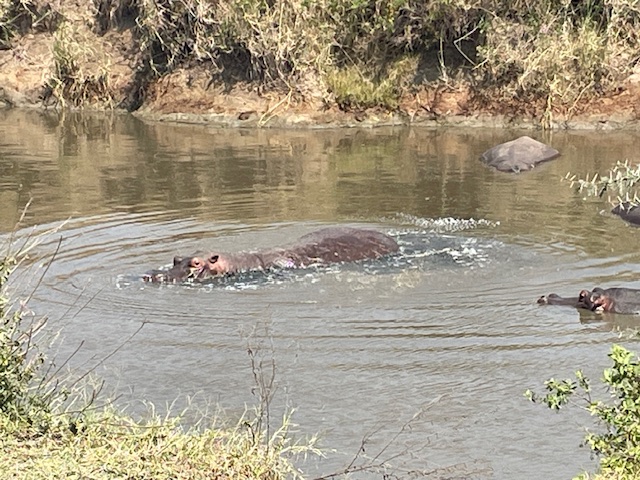
Submerged in muddy brown waters, hippo lazed, argued with one another in loud grunts and groans, or splashed playfully while eyeing us.
Their water refuge protects their delicate skin from the harsh rays of the sun.


Lions slept in pairs on the grassy knolls. A few looked up warily as we passed. Some even walked between our vehicles, oblivious to our stares and cameras. Once an enormous cape buffalo veered toward us, trying to escape a young male lion. The chase soon ended when the lion who jumped on the buffalo’s back got thrown off and stomped by the buffalo. As the buffalo rushed away, the wounded lion sat licking its wounds until another lion joined it and snuggled sympathetically, then licked the injured lion’s wound.
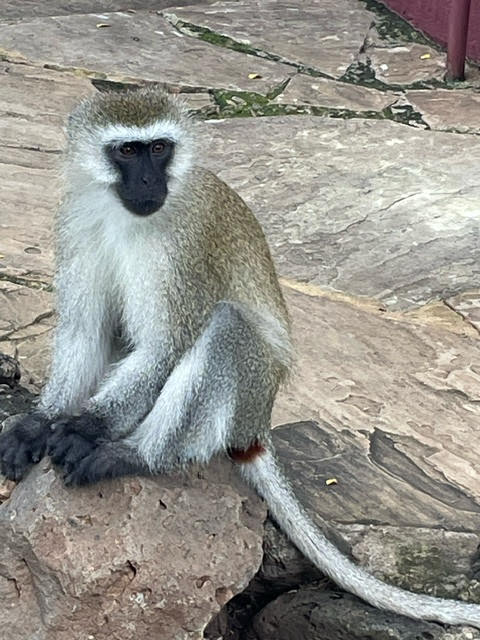
Monkeys nested in trees, in groves, or sat staring at us. These primates form large communities as protection from predators. Smaller vervet monkeys could be found outside our lodgings, climbing fences, or trying to procure food or neglected possessions left by guests.


Thompson’s gazelles, springboks, Topi, and Grant’s gazelles graze on the grasses in Ol Pejeta Conservancy. Warthogs zigzag, tails erect, as they forage, and impalas leap across dirt roads to get to the grassy side.


The Maasai
We visited a Maasai Village in Kenya where we learned about their culture, their use of natural remedies for medicine, and their agricultural lifestyle which included farming and herding goats, cows, and cattle. Their warriors sang and danced. Their women sold handmade crafts, beaded jewelry, pottery, and woven baskets. They are a proud people, and welcomed us to visit, to join their tribal song and dance, and to buy their crafts.
The eve before our tour ended, several Maasai entertained our tour group with their traditional song and dance during our farewell dinner. We applauded. “Asante.” Thank you in Swahili. We said this several times to those who served us, drove us, and guided us. They made this a wonderful trip; one I certainly will never forget.








0 Comments